
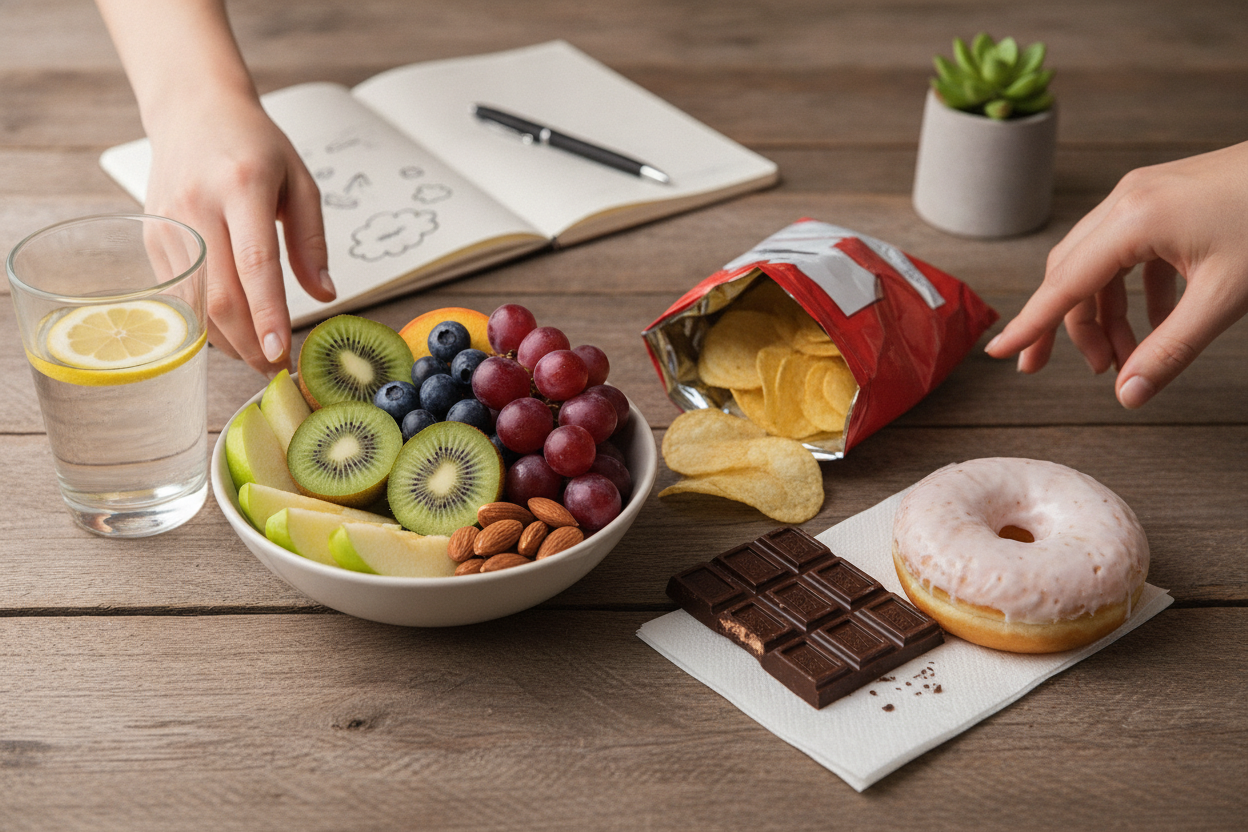
Cravings are not just about willpower. They are often the result of poor sleep, irregular meals, stress, dehydration, or food choices that leave you underfed and unsatisfied. If you want to reduce cravings without artificial appetite tools, the answer usually starts with structure.
Make sure your meals contain enough protein and fiber, because both help with fullness. Do not wait too long between meals if that pattern leads to overeating later. Many people also find that eating enough at breakfast and lunch makes nighttime cravings much easier to manage. When your body feels nourished, the urgency drops.
Stress is another major factor. When pressure builds, the brain looks for quick relief, and food is often the easiest target. A short walk, a few minutes of breathing, or even a reset away from your screen can interrupt the pattern before it snowballs. The goal is not to eliminate every craving. It is to make them less powerful.
If certain foods trigger a cycle, keep them out of sight or buy them in smaller amounts. Environment matters more than most people admit. When you combine better meals, better sleep, and a calmer routine, cravings become easier to handle without feeling like a constant battle.
Leave a Reply