
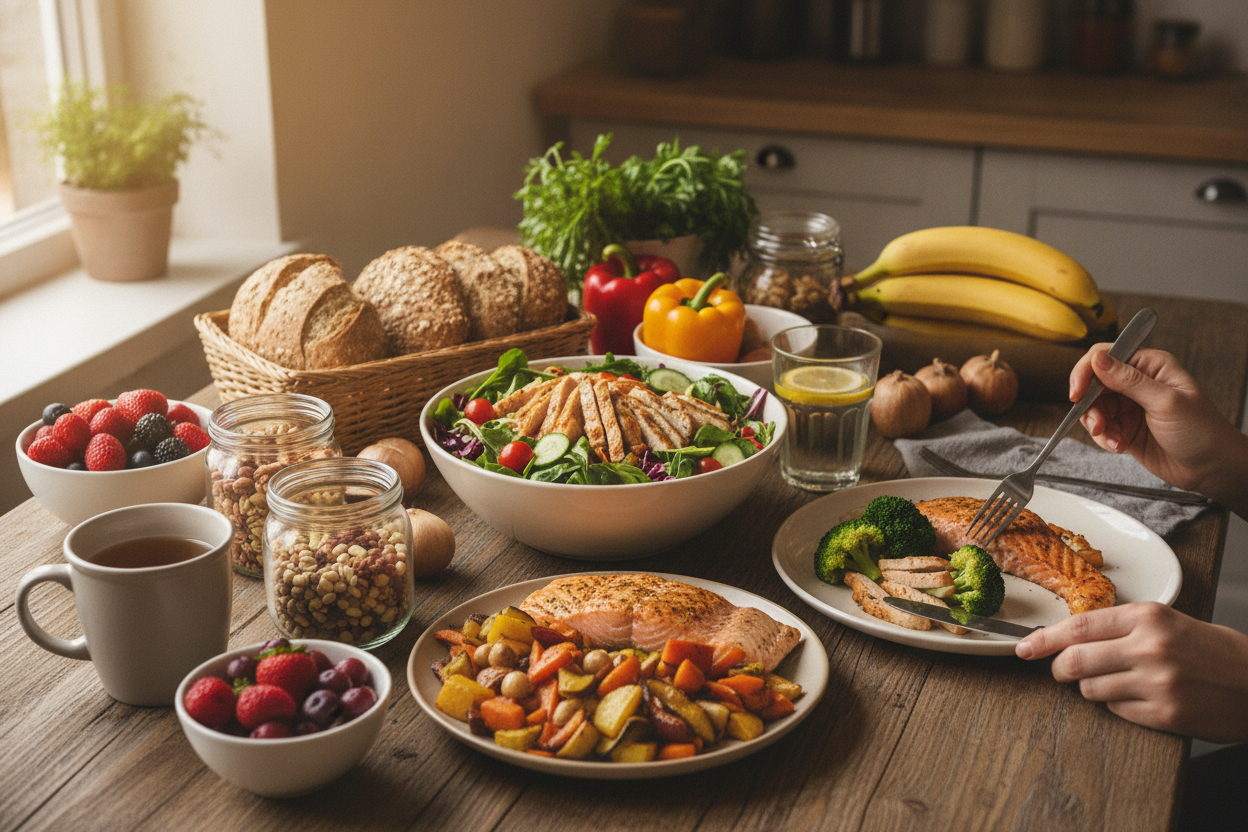
If you want better health without GLP-1 medications, peptides, or artificial supplements, food quality has to do more of the work. That does not mean chasing perfection. It means building meals around protein, fiber, healthy fats, and produce so your body gets what it needs in a form it can actually use. A simple rule helps: if most of your meals look like real food, you are already ahead.
Start with protein at each meal because it supports fullness, muscle maintenance, and steadier energy. Add vegetables or fruit for volume, fiber, and micronutrients. Include a smart carb source when your activity level calls for it, especially around training or busy workdays. Keep ultra-processed foods as occasional extras instead of daily defaults, and you will usually notice better appetite control without feeling restricted.
Hydration matters too. Many people confuse mild dehydration with hunger or fatigue. Water, mineral-rich foods, and regular meals often solve the problem faster than another product ever will. If you are trying to lose weight, consistency beats intensity. A sustainable eating pattern you can repeat on ordinary Tuesdays will outperform a flashy reset you abandon by Friday.
The goal is not to turn eating into a spreadsheet. It is to create a rhythm that supports your energy, mood, and goals with less friction. When your meals are built from whole foods, you give your body a more reliable foundation for long-term health.
Leave a Reply